
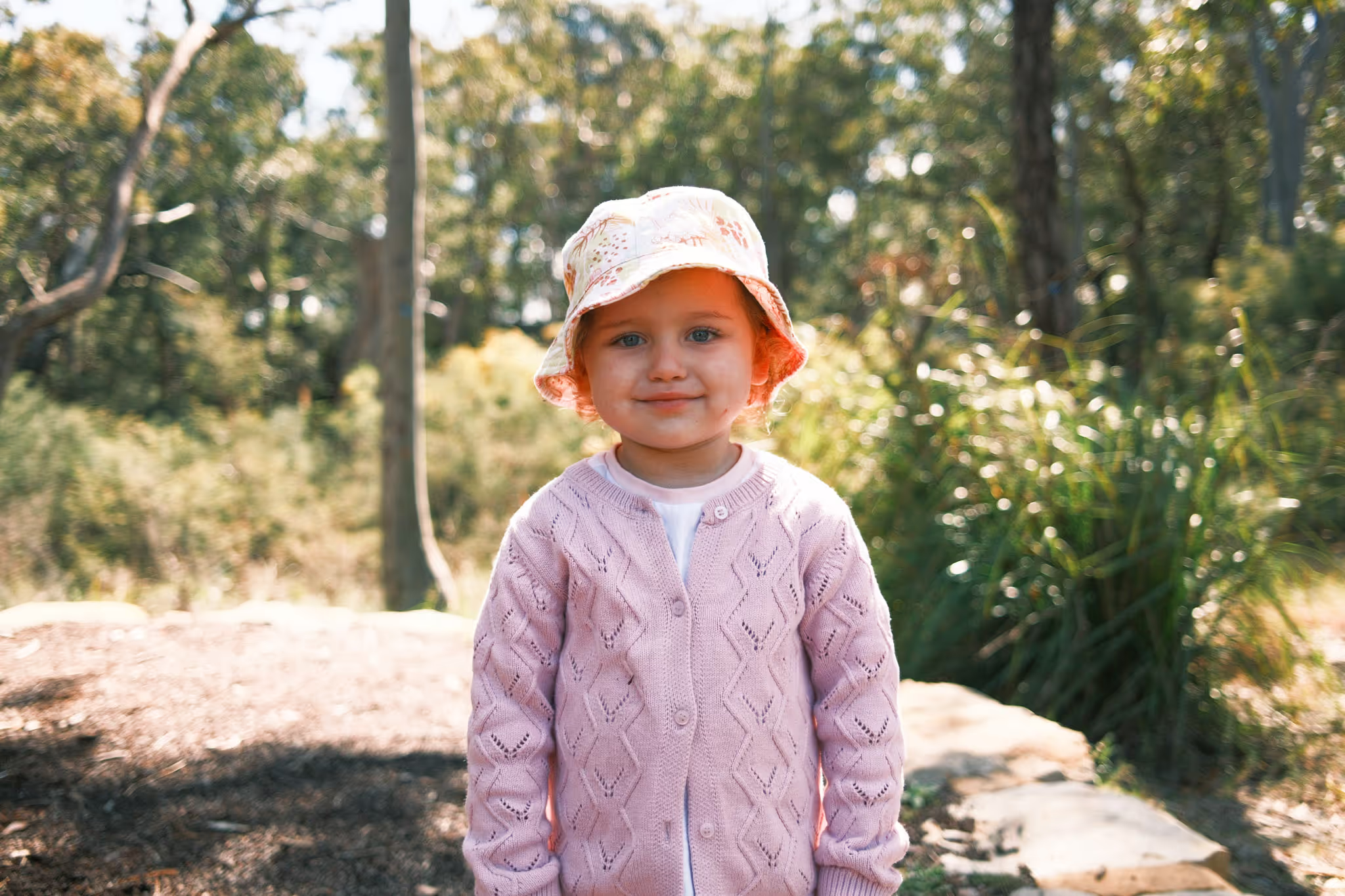
One little girl's journey with EoE and complex allergies is helping shine a light on why personalised research matters — and why HCRF is raising $30,000 to fund the answers families need.
Before Matilda's family even knew the word eosinophilic oesophagitis, they knew something wasn't right.
From her very first months, Matilda had severe eczema, which led her family to discover she had serious food allergies. They worked hard to get things under control — but something still wasn't right. Matilda was coughing, choking, and vomiting at mealtimes.
Eventually, those symptoms led to her EoE diagnosis. Managing EoE is especially complex for Matilda. She lives with anaphylactic allergies to dairy, egg, peanut and legumes, which means the usual food elimination approach that many EoE children follow simply isn't an option for her right now. Instead, she takes a daily steroid slurry to manage the inflammation in her oesophagus.
From her very first months, Matilda had severe eczema, which led her family to discover she had serious food allergies. They worked hard to get things under control — but something still wasn't right. Matilda was coughing, choking, and vomiting at mealtimes.
Eventually, those symptoms led to her EoE diagnosis. Managing EoE is especially complex for Matilda. She lives with anaphylactic allergies to dairy, egg, peanut and legumes, which means the usual food elimination approach that many EoE children follow simply isn't an option for her right now. Instead, she takes a daily steroid slurry to manage the inflammation in her oesophagus.
More than her diagnosis
Matilda is three years old. She is also — as her family will tell you — so much more than her diagnosis.Her parents, Kayla and Will, chose to share their story because they want other families navigating the overwhelming world of EoE and complex allergies to know they are not alone. We are deeply grateful for their openness and generosity in doing so.
Why This Research Matters
Stories like Matilda's are why HCRF is raising $30,000 for vital EoE research led by Dr Scott Nightingale at the Hunter Medical Research Institute (HMRI). This research could mean less invasive monitoring, more personalised treatment options, and real answers for children whose conditions are as complex and individual as they are.
How you can help
Every dollar raised goes directly to this research. If Matilda's story has moved you, please share it — awareness is how research finds its funding. And if you're in a position to donate, every contribution brings us closer to the breakthroughs these children deserve.To donate or learn more about HCRF's EoE research campaign, visit our EoE Page.