Hellf Fund Life Changing Research for Kids with EoE

We’re supporting local research to improve treatments and monitoring of EOE in children.
Help us, help them!

Goal: $30,000 by August 2026

Donate Now

For most families, mealtimes are moments of connection. But for some children, eating can mean pain, fear, or frustration.

Eosinophilic Oesophagitis (EoE) is a painful, lifelong condition that causes inflammation in the oesophagus - the food pipe that carries food from the mouth to the stomach. It can make swallowing difficult and lead to food getting stuck. For children, this often means slow eating, fear of choking, poor nutrition, and social isolation.

Right now, there is no simple way to monitor or treat EoE. Children must undergo repeated endoscopies under general anaesthetic to track inflammation and test which foods might be safe. Many are placed on highly restrictive diets that remove major food groups like dairy, wheat, soy, eggs, and nuts, often without clear guidance on what’s truly triggering their symptoms.

Help us bring hope, comfort and improved treatment options to children living with EOE

Mother and child

We need your help to raise $30,000 by August 2026 to fund a dedicated research grant and team researching new treatment and monitoring options that can transform how EoE is treated.

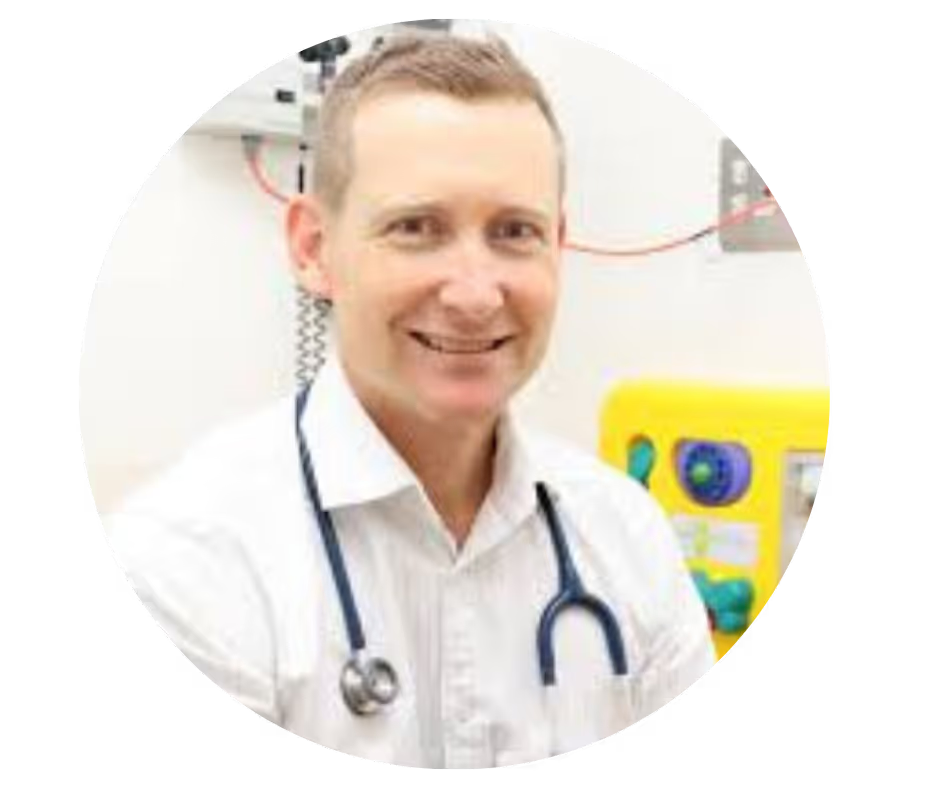
The research project - Developing New Therapies and Ways to Monitor Eosinophilic Oesophagitis (EoE) in Children – led by Dr Scott Nightingale based at HMRI and John Hunter Children’s Hospital is hoping to change the experience of children and their families with EoE.

Donate Now
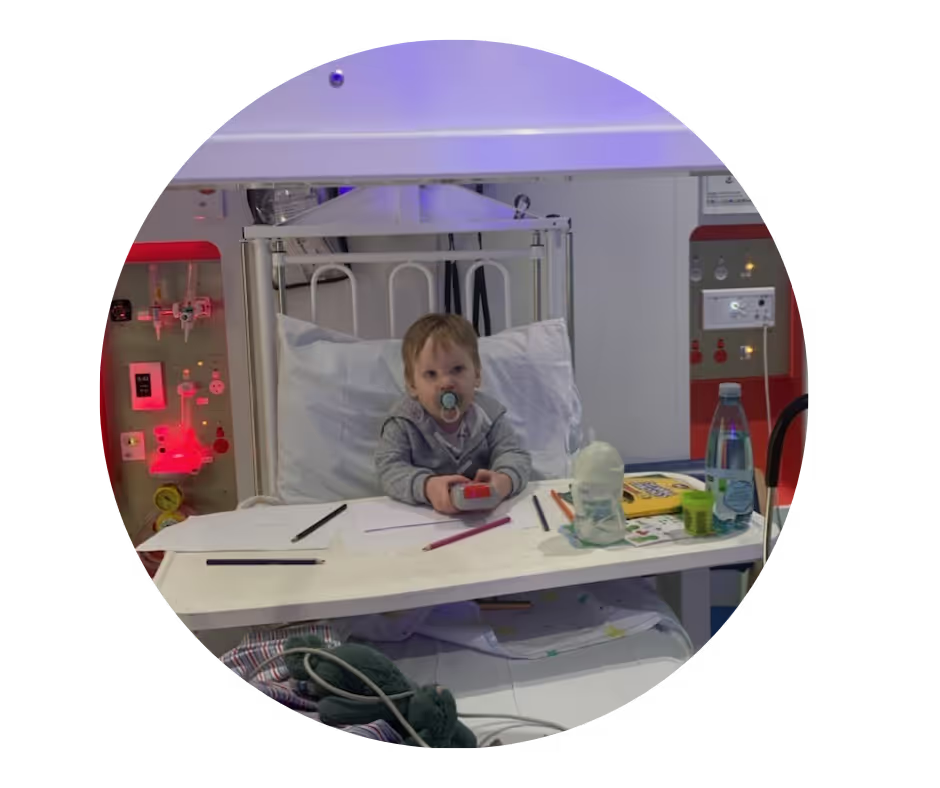
Child in hospital

Why it matters

Behind every research project is a child - and a family - hoping for answers. For children with EoE, this research offers a path to relief and freedom. It’s about more than science; it’s about helping kids eat a meal without fear and giving parents hope for their child’s future.

Your support can help take this research from the lab bench to the bedside, and change lives here in the Hunter and beyond.

Any donation, big or small, can make a difference. Donations over $2 are also tax deductible.

We know we can do this. We know we can help these families by helping this team make their ideas happen!

Child in hospital bed

More information

Why is this research needed?

There are two main issues with current research into EoE:

  • There is a lack of reliable clinical and non-invasive methods to monitor the disease and response to treatment. Currently repeated endoscopies (under general anaesthesia) are required.
  • There are currently limited treatments available, including swallowed steroids which can reduce inflammation but aren’t always effective and might be needed long-term, and elimination diets which can be challenging to follow, social isolating and present risk of nutritional deficiencies.

What method will the team use to conduct this research?

The research team is working to change the experience of children with EoE by carefully studying children with EoE seen at John Hunter Children’s Hospital and developing a tissue bank from small samples of oesophageal tissue (biopsies), which are already being taken at endoscopy for diagnosis and monitoring.

The tissue will help the team to:

  • Test for food triggers directly on oesophageal tissue in the lab. This will allow them to see how an individual child’s organoids respond to certain foods without exposing a child to the food in real life or having them unnecessarily restrict the food.
  • Trial potential new drugs in a safe environment. Before moving to human studies, drugs can be tested on organoids to see if they reduce inflammation and improve oesophageal health. The team has one drug in mind which has a very good safety profile and which has previously shown promise.

What are the two focus areas of the research?

  • Better disease monitoring: testing non-invasive ultrasounds as a painless way to monitor the condition over repeated endoscopies and using more personalised questionnaires for patients.
  • New treatment approaches: using tissue samples to grow and study organoids from individual patients in the EoE lab to resemble a child’s oesophagus. These can be used to test for food triggers and to test new drugs in a safe environment.

What are the potential benefits of the research?

  • Reduce the need for repeated invasive endoscopies for disease assessment.
  • Make elimination diets more targeted and less restrictive, improving nutrition and quality of life.
  • Lay the groundwork for clinical trials of a promising new drug, with organoids providing early evidence of effectiveness.

HCRF & HMRI

HCRF is an auspice group of HMRI, meaning we operate as a volunteer committee under the governance of HMRI.

HCRF is a volunteer committee dedicated to raising funds that go directly towards research supporting children and families in the Hunter New England Region and across the globe.

Donate to Hunter Children's Research Foundation today!