
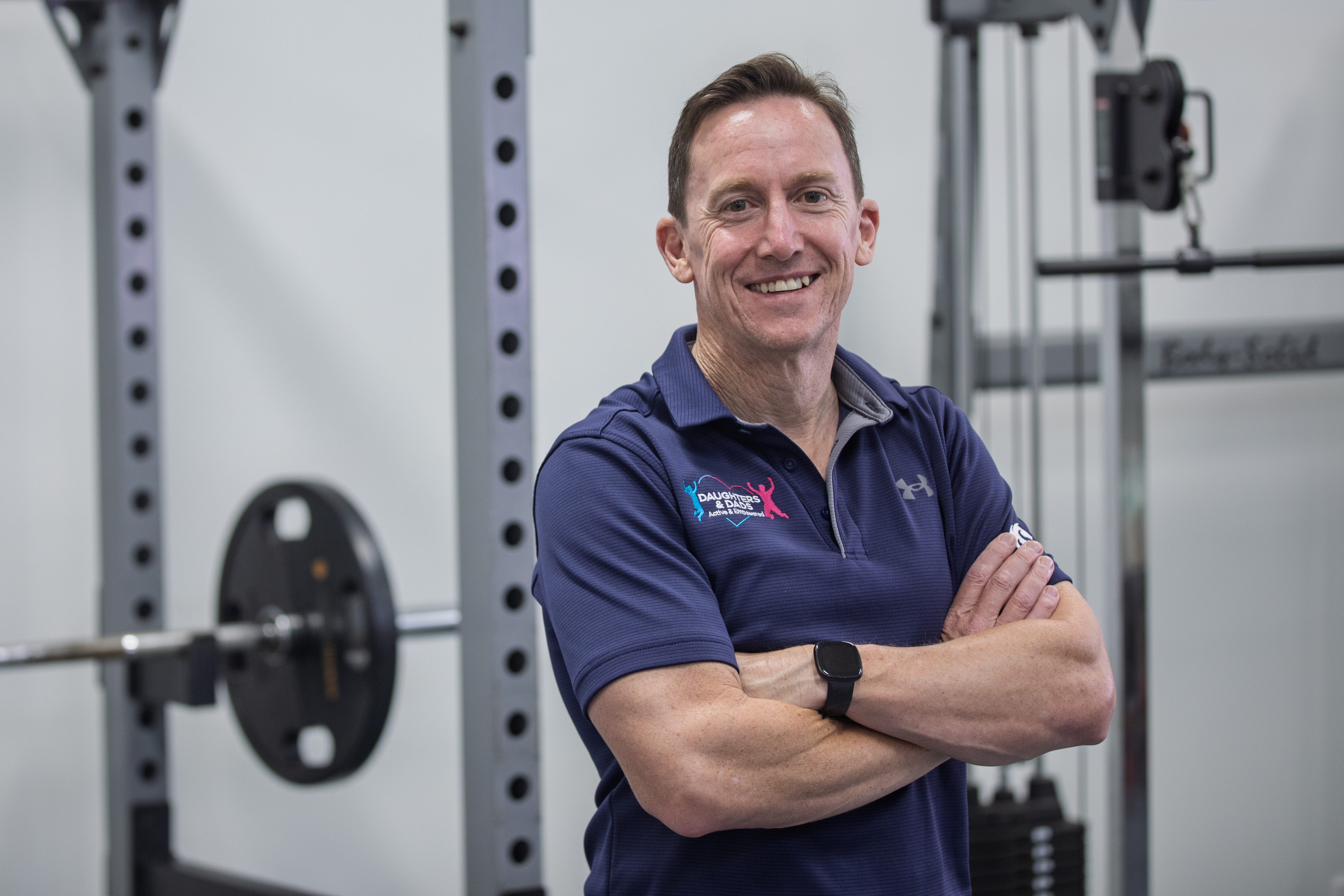
Professor Philip Morgan is the Co-Director of the University of Newcastle’s Centre for Active Living and Learning.
His research career has centred on the development, delivery, and evaluation of innovative school and community programs that promote physical activity, sport participation, and overall wellbeing.
Over the past decade, his work has evolved to focus strongly on men’s health and family wellbeing, with a particular emphasis on engaging fathers and father figures as positive agents of change.
“Fathers are significantly underrepresented in paediatric research and community health initiatives globally,” Professor Morgan explains. “My research has sought to address this critical gap.”
Some of the flagship programs he has developed include Healthy Dads, Healthy Kids; Daughters and Dads Active and Empowered; Healthy Youngsters, Healthy Dads; SHED-IT; and Workplace POWER. These programs, many of which originated in the Hunter region, have achieved national and international recognition. They are now being implemented across Australia and in multiple countries worldwide, with growing interest from government bodies, not-for-profit organisations, professional sports teams, and corporate partners.
A life shaped by sport and family
I loved being a PE teacher but became increasingly interested in the broader impact I could make through research,” he says. This led him to begin a PhD in 1998, focusing on improving the quality of primary school physical education.
“I quickly saw the powerful role research could play in transforming lives at scale.”
HCRF support that sparked a global movement
The seed funding provided by the Hunter Children’s Research Foundation (HCRF) in 2015 was critical to the development of Daughters and Dads Active and Empowered.
“At the time, we had been running family-based programs like Healthy Dads, Healthy Kids, but it was often difficult to engage fathers,” Professor Morgan says.
“Through that experience, I noticed differences in how dads interacted with their sons compared to their daughters, and I became increasingly aware of the challenges girls face around physical activity, sport skills, self-esteem and confidence.”
These observations, combined with a gap in research on the father–daughter relationship, inspired him to create a world-first program that would use fathers and father figures as key agents of change to empower their daughters.
“The idea was to enhance girls’ physical activity and sports skills, improve father–daughter relationships, and provide dads with evidence-based parenting strategies to support their daughters’ wellbeing and their own.”
However, it was an untested concept, and the team had no pilot data, making it difficult to secure traditional funding.
“HCRF was the first organisation to believe in the potential of the idea, awarding $25,400 in seed funding,” he says. “This support allowed us to develop the program and its resources and to conduct vital initial testing.”
That early investment laid the foundation for what has become a national and international success. Daughters and Dads Active and Empowered has now engaged more than 7,000 participants, received multiple awards for research excellence and impact, and been recognised by the World Health Organization as a leading example of community-based health promotion.
“It simply would not have been possible without HCRF’s early belief in us and their willingness to back a bold, innovative idea before it had the data to support it,” he says.
Lasting impact and continued growth
Due to the generous donation provided by HCRF, Professor Morgan was able to develop Daughters and Dads Active and Empowered, a world-first program that has gone on to achieve extraordinary success both nationally and internationally.
“That initial $25,400 in seed funding enabled us to develop the program resources and conduct vital early testing,” he explains. “It gave credibility to an untested idea and opened the door to further funding.”
The results attracted major investment, including over $800,000 from Port Waratah Coal Services and a $2.4 million grant from the NSW Government to support a four-year state-wide rollout. Since then, the program has attracted more than $6 million in research and commercial funding and has been delivered across five Australian states and four countries.
The program has been adapted for cricket, basketball, football, cycling, and golf through partnerships with major sporting bodies including Cricket Australia, Basketball NSW, Football NSW, and Golf Australia.
“The impact has been profound,” Professor Morgan says. “It has improved girls’ physical activity, sport skills, and social-emotional wellbeing, strengthened father-daughter relationships, and advanced gender equity.”
Benefits have been sustained long-term, even years after participation, and the program has been recognised by the World Health Organization and NSW Parliament, winning more than 20 awards for research excellence and community impact.
The team has embedded facilitator training into an award-winning University of Newcastle course, allowing educators to champion gender equity and community health. The program has also supported 31 Higher Degree Research students, helping build the next generation of researchers.
In 2021, the team received the inaugural HMRI Foundation’s Research Team Excellence Award - recognition of a movement that began with early belief and support from HCRF.
“None of this would have been possible without HCRF,” Professor Morgan says. “That early investment has grown into a national movement that is transforming the lives of girls and their families and it all started right here in the Hunter.”
"HCRF was the first to believe in our idea, helping us turn a small local project into a program that’s transforming the lives of girls and their families.”