
Exploring how environmental contaminants affect fertility and child health
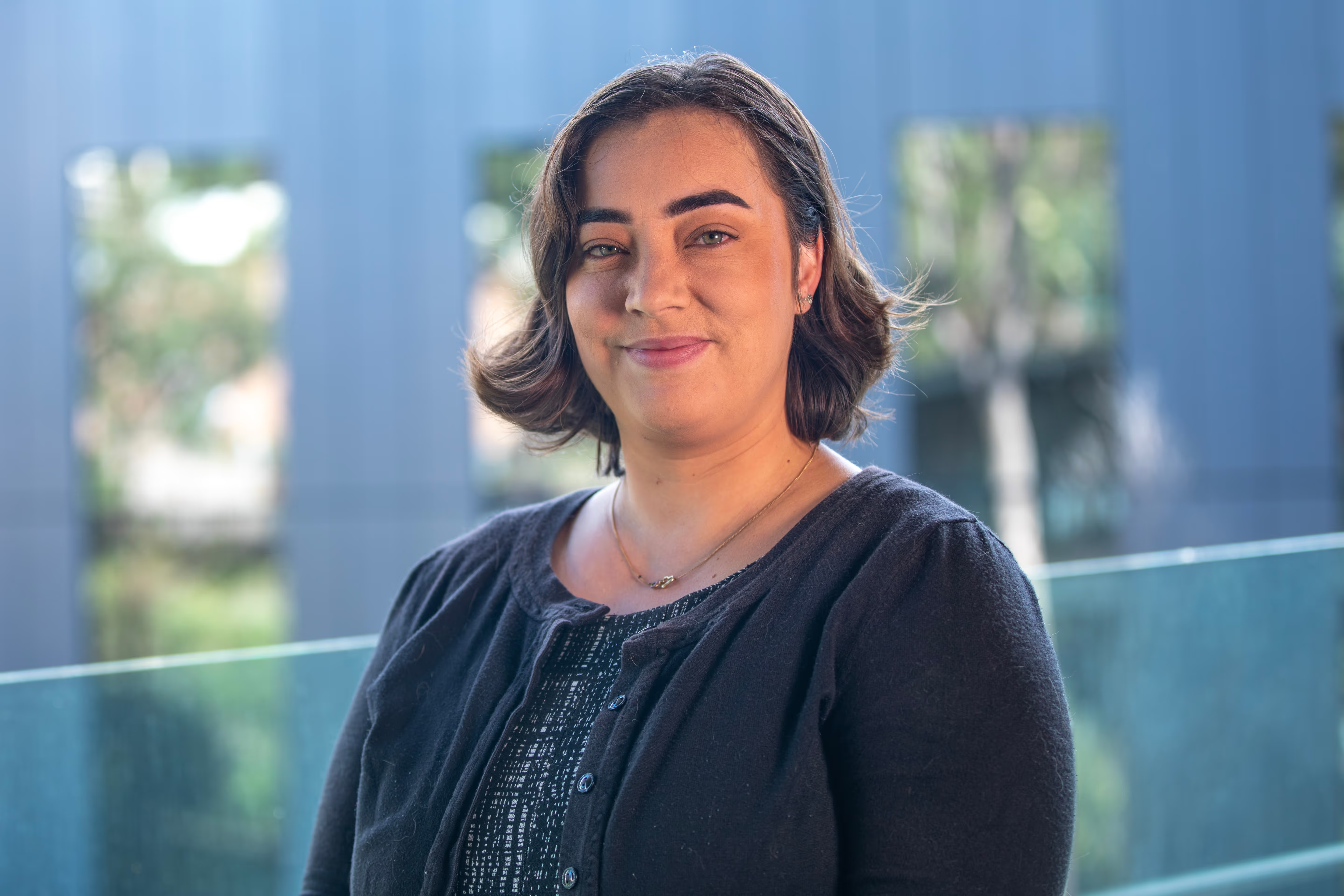
Dr Jacinta Martin is a reproductive biologist with a focus on environmental toxicology. Her research explores how environmental contaminants, particularly endocrine-disrupting chemicals like PFAS, affect fertility, early development, and long-term health.
“I’m passionate about bridging fundamental reproductive biology with real-world environmental health challenges, with the goal of improving outcomes for children and their families,” she says.
A local scientist with a passion for inclusion and education
Growing up in Newcastle, Dr Martin has always had a deep love for science and the natural world.
“When I’m not in the lab or writing papers, you can usually find me reading, crocheting or exploring new corners of a bookshop,” she says.
She is passionate about inclusive education, creative science communication, and supporting the next generation of researchers - particularly women and regional students in STEM.
HCRF support providing vital early-career opportunities
The Hunter Children’s Research Foundation (HCRF) donation provided a lifeline at a critical point in Dr Martin’s career. It allowed her to pursue a novel line of investigation examining the impacts of PFAS exposure on a local community group.
“This donation gave me the time and resources to generate critical pilot data and collaborate with clinicians and our community,” she explains. “It allowed me to break through barriers both in terms of research feasibility and institutional backing for early-career-led ideas.”
This funding has not only enabled critical early-stage research but also strengthened her track record, positioning her to secure future competitive grants and government support for long-term impact.
Building momentum and inspiring future researchers
Thanks to the generous support of HCRF, Dr Martin has been able to remain active in her research field during a time when many early-career scientists are forced to pivot or step away.
“I have trained Honours and PhD students who are now pursuing careers in biomedical research, and I’m using the preliminary findings to apply for further competitive grants,” she says.
“Our research is already contributing to national conversations about chemical safety regulation, and we’re hopeful that the outcomes will lead to better guidelines to support healthier pregnancies, children, and families.”
The visibility and momentum generated through this work have helped Dr Martin build a growing national reputation in reproductive toxicology. In 2023, she was awarded the inaugural Royal Society of NSW ‘Bicentennial Early Career Research and Service’ citation.
“With HCRF support, I’ve been able to continue my research into how environmental contaminants affect fertility and child health, helping shape a healthier future for families.”