
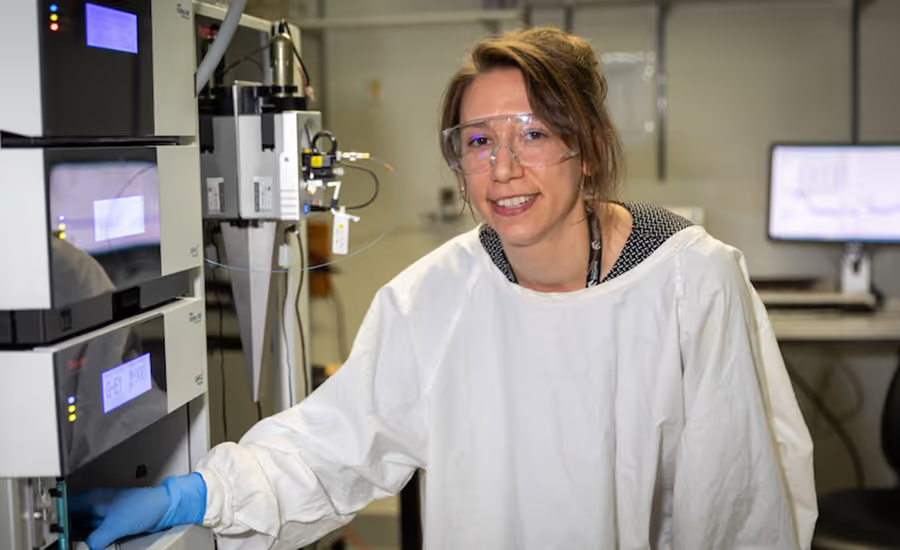
Dr Heather Murray, is dedicated to giving children with leukaemia the best possible chance at life.
She focuses on understanding what makes each child’s disease unique and finding treatments that target those specific drivers, helping to make therapies more precise and effective.
“The drivers in the blood cells that cause leukaemia are different in every patient,” Dr Murray explains. “A one-size-fits-all treatment is often not effective, so my work identifies the specific characteristics found in different leukaemia cells and matches therapies that target them.”
Life outside the lab
Born and raised in Newcastle, Dr Murray has strong ties to the local community. Away from her research, she enjoys walking her three dogs Tilly, Sooty and Flossy along the beach. She also plays soccer with her local club and loves to relax with crochet.
Transforming treatment for children with leukaemia
Acute myeloid leukaemia (AML) is the second most common blood cancer in children, with around 50 Australian children diagnosed each year. Current treatments can cause harsh side effects, and for some children the cancer comes back.
“About 30 per cent of children with AML will have the disease return after treatment,” she says. “Tragically, 10 per cent of children pass away, sometimes due to the severe side effects of the treatments themselves.”
With funding support from the Hunter Children’s Research Foundation (HCRF), Dr Murray is leading a world-first study to analyse the proteome of childhood AML. This work maps out the proteins that drive the disease and block treatment responses.
“This work will allow us to identify the processes that are causing cancer cells to grow and evade treatment. Importantly, these are potential new avenues for improved therapies.”
Building momentum for future breakthroughs
The HCRF grant has also opened doors for new collaborations and long-term impact.
“This funding allowed me to establish a collaboration with Dr Patrick Connerty at the Children’s Cancer Institute Australia. Without donations like this, it is difficult to find the support to start new projects and collaborations,” she says.
Looking ahead, Dr Murray hopes this momentum will attract larger-scale investment in her work.
“This support is helping me generate valuable data and build the evidence I need to apply for larger grants. It is allowing me to show that my research is making real progress towards curing childhood AML.”
"I’m very grateful for the support of HCRF. The work we do to find better treatments for children with blood cancer is only possible thanks to organisations like them.The work we do is only possible because of organisations like HCRF. I’m so grateful for their support.”-